Magnesium: A Queen of Herbs Topic Guide
The short version: why magnesium gets so much attention, why topical magnesium can tingle, how to use it, and when a balm beats a spray.
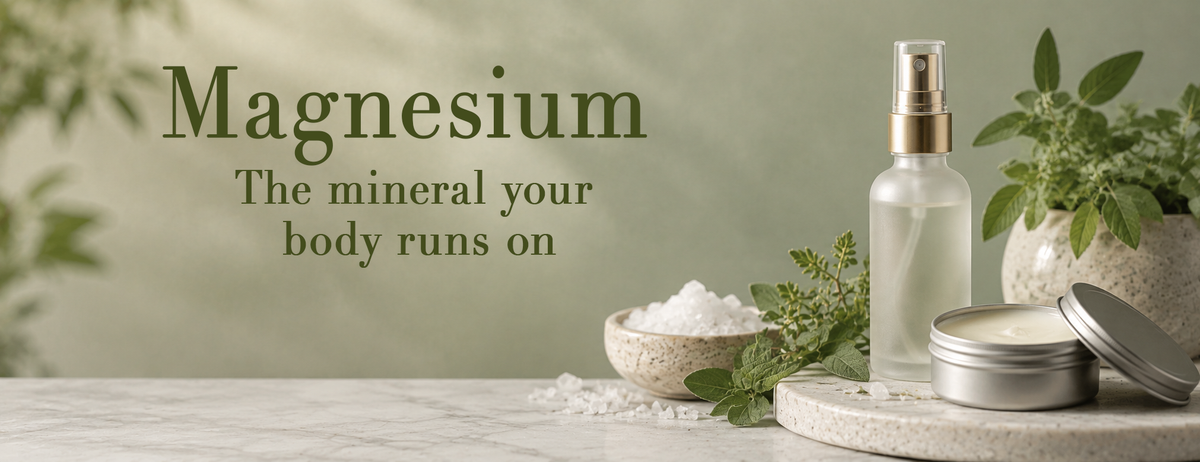
Magnesium is one of those minerals everyone talks about, usually with just enough confidence to make the whole topic more confusing.
This guide is the short version to answer some common questions.
Why magnesium gets talked about so much
Magnesium is a cofactor in more than 300 enzymatic reactions. Muscle function, nerve signalling, energy production, protein synthesis, DNA repair - if a cell is doing something important, magnesium is probably somewhere in the chain.
It is also what keeps the electrical system of the body running steadily: heart rhythm, muscle release after contraction, the difference between a nerve that fires cleanly and one that keeps firing when it should have stopped.
So when people are run down, tense, over-caffeinated, stressed, underfed, depleted, or living like modern life is a competitive sport, magnesium tends to come up.
This is also why it became one of the major minerals in the natural health world. People noticed that it seemed to fit the pattern of modern depletion: stress, poor soil, processed food, mineral imbalance, bodies running on fumes while everyone pretends that is normal.
That is the short version.
The longer version belongs in a full article, because magnesium does not live alone. Calcium competes with it for the same absorption channels. Hormone D pulls it into conversion pathways. Chronic stress burns through magnesium reserves faster than most diets replace them. Look at one mineral in isolation and you are already missing most of the picture.
Why magnesium balm can tingle
Topical magnesium can tingle because magnesium chloride is mineral-rich and naturally salty.
That salty mineral feel is part of why magnesium oil can feel sharp on the skin. It is not actually an oil - it is basically just magnesium chloride dissolved in water, but it feels slippery, so people call it magnesium oil. The balm format wraps the same mineral in a skin-friendly base, which softens the experience considerably - but the mineral is still there, and skin still loves it.
Skin condition matters.
Magnesium oil is not actually an oil. It is a concentrated mineral salt solution, so it behaves more like salty water on the skin. If you apply it to dry skin, freshly shaved skin, sensitive areas, or tiny invisible scratches, it can sting more.
If your skin is dry, cracked, freshly shaved, irritated or scratched, magnesium can feel stronger. Sometimes it tingles, sometimes it stings.
That does not mean something is wrong, but if those are not factors in your case, tingling or stinging typically indicates a deficiency of magnesium. It is often stronger at first (usually a couple of weeks) and then settles down as your body’s magnesium levels improve and your skin adjusts.
If the tingling is too much, use less. Apply it to a smaller area, put it over a plain moisturiser, or rinse it off after 15–20 minutes. You can also dilute it slightly with water until your skin tolerates it better.
Start small and try tougher areas first - feet, calves, shoulders, or back. Avoid freshly shaved legs unless you enjoy unnecessary consequences.
If you are sensitive, apply a plain oil or lotion first, then use the balm over it.
How to use magnesium balm
Start with a grape-sized amount and massage it into the area you want to target.
Common places: feet, calves, shoulders, neck, lower back, hands, anywhere you want it as part of an evening body-care routine.
It is also pretty great on cracked heels and helps them feel less rough.
Best times: Magnesium balm is usually best used when the skin is clean, calm, and not freshly irritated. After a shower can work well because the skin is warm and slightly more receptive to oils and balms.
Many people prefer using it in the evening because the application itself is slower than a spray. It works well on feet, calves, shoulders, lower back, or other areas where you want a more targeted topical mineral product.
Do not apply it to eyes, mucous membranes, open skin, freshly shaved skin, or irritated skin.
If the sensation feels too strong, reduce the amount. You can also apply it over a plain lotion or oil, or choose a less sensitive area such as the feet. The goal is steady, tolerable use — not forcing more product onto skin that is already reacting.
Magnesium balm vs magnesium spray
Magnesium spray and magnesium balm both deliver magnesium chloride to the skin, but they are not the same kind of product.
A spray is usually the more direct option. It covers a larger area quickly, dries faster, and works well for people who want broad application with minimal rubbing. The tradeoff is that sprays can feel sharper because the magnesium chloride is usually carried in water, with very little buffer between the mineral salt and the skin.
A balm is slower, richer, and more targeted. The magnesium is held in a richer base, which changes the way it feels on the skin. Instead of drying down quickly like a watery spray, a balm gives more glide, more cushion, and more time to massage the product into one specific area.
Use spray when you want fast, broad coverage with minimal fuss. Use balm when you want slower application, richer texture, targeted use, less mess, something that stays put better, more of a body-care ritual and less of a clinical spray.
Where to apply magnesium balm
Feet - usually less sensitive, easy to cover before bed. Calves - useful if you want a larger area without using a spray. Shoulders - good for massage-style application. Lower back - easy to target after long sitting or physical work. Hands - good if you want a small test area first.
Avoid eyes and lips, broken or cracked skin, freshly shaved skin, rashes, active irritation, anywhere your body is already complaining.
If you are new to topical magnesium, start with feet. Feet are less dramatic than legs. Usually.
Related product
Herbs of Love Magnesium Oil & Magnesium Balm
For people who want topical magnesium, Herbs of Love offers both magnesium oil and magnesium balm. The oil is the more direct option: lighter, faster, and better when you want broader coverage. The balm is richer, slower, and better for targeted use on areas like feet, calves, shoulders, back, or as part of an evening routine.
Choose the oil if you want fast application and wider coverage. Choose the balm if you want a richer texture, less mess, and something that stays put while you work it into one specific area.
Shop Magnesium Oil Shop Magnesium BalmWant the deeper version?
This guide is the short version. The deeper Queen of Herbs article goes into magnesium, stress, depletion, mineral balance, hormone D activation, and the larger mineral system that magnesium belongs to.
That is where the bigger picture starts to matter: how calcium and magnesium interact, how chronic stress affects mineral reserves, how magnesium helps activate hormone D, and what the research actually shows about depletion patterns.
Magnesium does not work by itself. It has context, cofactors, competitors, and conditions that affect how well the body can use it.
Read the article: Magnesium, Stress & Mineral Depletion →This guide is educational only and is not medical advice. Not intended to diagnose, treat, cure, or prevent disease. Use topical products with common sense. Patch test if sensitive. Avoid broken, irritated, or freshly shaved skin.